Ever wondered why your favorite pair of jeans feels like it came with a hidden environmental cost? I used to think my biggest fashion guilt was impulse-buying another black turtleneck. Turns out, the real issue runs much deeper—literally.
The fashion industry is notoriously thirsty. We’re talking 79-93 billion cubic meters of water annually, according to the UN—enough to meet the drinking needs of 5 million people. That stat stopped me mid-scroll when I first read it. It’s not just about overconsumption; it’s about the invisible water debt behind every piece we wear.
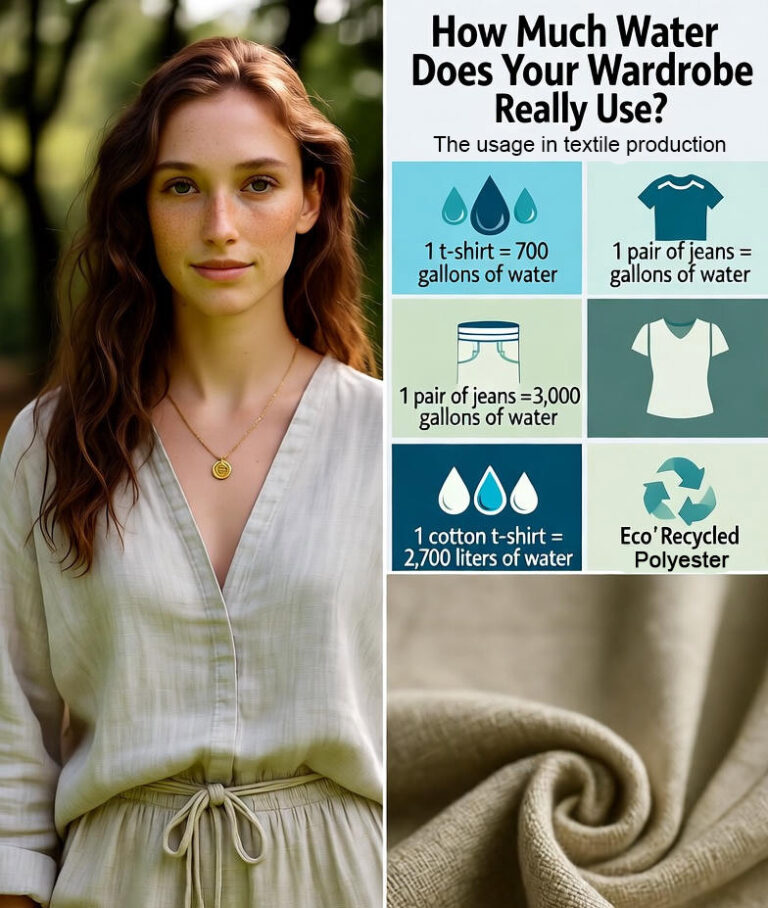
Let’s break down what’s actually in your closet. Cotton is the backbone of most wardrobes, and it’s a serious water hog. Growing enough cotton for one basic T-shirt requires about 2,700 liters of water—roughly what one person drinks over 2.5 years. Scale that up to a pair of denim jeans, and you’re looking at 3,781 liters. Then there’s dyeing and finishing, which uses another 200 liters per kilogram of textiles. The World Bank reports that textile dyeing is the second-largest water polluter worldwide, right after agriculture.
And if current fast fashion trends continue? The industry is projected to double its water use by 2030.
Here’s where it gets hopeful: sustainable swaps can actually make a difference. I’ve been gradually shifting my own wardrobe toward organic cotton and linen pieces, which use up to 91% less water in farming compared to conventional cotton. Materials like Tencel and recycled fabrics take it even further, though I’ll admit the transition is a process, not a quick fix.
Linen has become my go-to for those brunch-to-errands days—breathable, machine washable (a must for busy schedules), and it doesn’t leave me wondering about the rivers that suffered for my outfit. Small swaps, lighter conscience.
Your wardrobe’s water story doesn’t have to end in waste. Start with just one outfit this week—maybe that go-to T-shirt or your favorite jeans—and see if there’s a lower-water alternative waiting to replace it when it wears out. No pressure to overhaul everything at once.